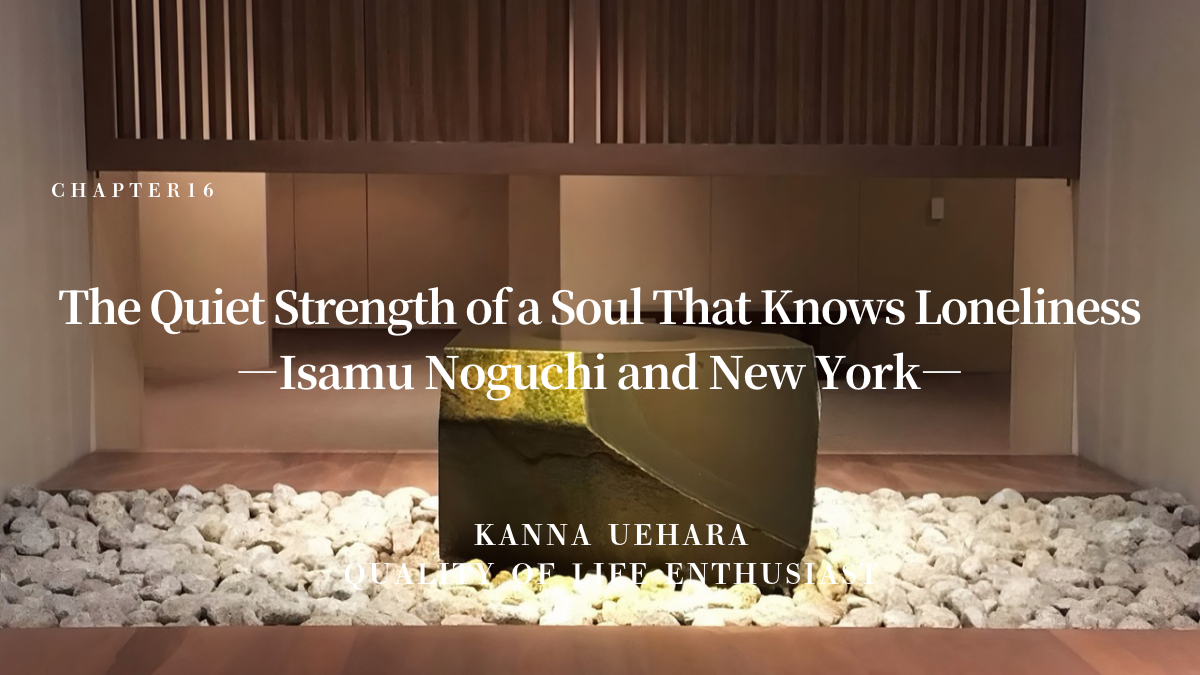
There are places in New York that, no matter how many times I return, somehow feel like coming home.
For me, one of those places was a quiet stone sculpture at The Metropolitan Museum of Art.
There was no grand statement, no demand for answers. Only water flowing gently over stone, and a sense of stillness that seemed to loosen something deep within me.
|A Secret Sanctuary in New York
During my years in New York, one place I returned to whenever I had the time was The Metropolitan Museum of Art.
Part of the reason was that I lived within walking distance. But the museum also stayed open until 9 p.m. on Fridays and Saturdays. After 7 p.m., the galleries often became noticeably quieter, sometimes giving me the rare pleasure of standing almost alone before the works I loved.
On the museum’s first floor, there was also a library that felt like a hidden gem.
While studying in New York, I often went there before exams. The library attracted students studying art history and architecture, as well as people who shared those interests. It was a wonderfully quiet space, and I made it my own little secret sanctuary for study.
Whenever I grew tired, I would leave my laptop and belongings in a locker, keep my valuables with me, and wander through the galleries.
I loved the Italian Renaissance, Baroque, and Rococo paintings. After the library closed, I would make my way to the Egyptian galleries, which took on an almost mystical atmosphere beneath the evening lights.
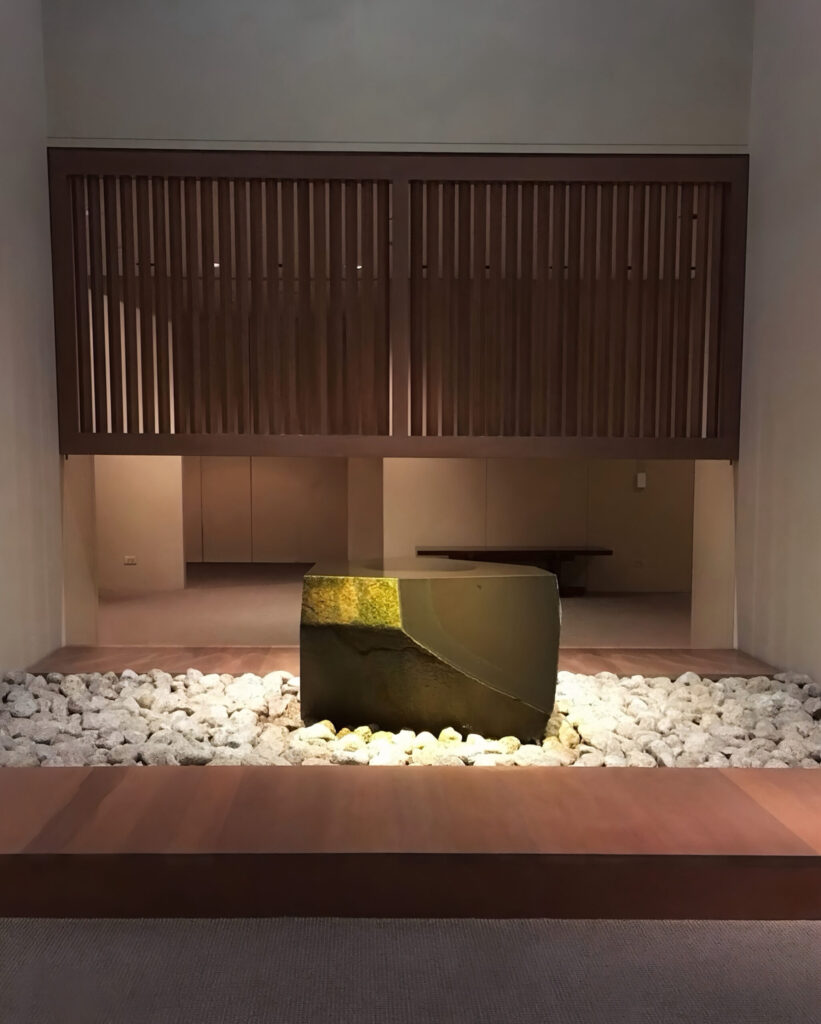
Yet one of the places I returned to most often was on the museum’s second floor, in the Japanese galleries, where I found a work by Isamu Noguchi titled Water Stone.
|How the Sound and Light of Water Quietly Unravel the Mind
Perhaps it has something to do with being a Pisces.
I have always been drawn to the soothing sounds of water and the light that shimmers beneath its surface.
Since childhood, I have loved the gentle waves along the shore, the murmuring of a small stream, and the shifting patterns of light inside the enormous aquariums at public aquariums. Even now, those simple sights and sounds bring me a sense of peace.
At night, the Japanese galleries were dimly lit and wonderfully quiet.
Water Stone was illuminated in an almost dreamlike way. Water flowed softly over the surface of a dark stone, so gently that it was barely noticeable.
The sound was almost imperceptible. Yet if I listened carefully, I could hear the faint, beautiful murmur of a stream. It was deeply comforting.
A small bench stood in front of the work.
I often sat there, allowing my mind to become completely still.
At times, the experience felt almost like Zen meditation.
I would spend long stretches simply watching the water flow, doing nothing in particular. It felt as though the fatigue of the day and the turbulence in my mind were gradually being washed away.
Sometimes, I reflected on my life and examined where I stood in the present. At other times, I thought about the future and what it might hold.
Nothing extraordinary happened.
And yet, simply sitting there seemed to quiet my mind and help me find my way back to myself.
Looking back, I wonder whether what I sought in that place was more than rest.
Perhaps I needed a little distance from the demands of everyday life—a quiet space where I could listen to the voice within me.
|Isamu Noguchi’s Art Lives Beyond the Museum Walls
Water Stone was not the only work by Isamu Noguchi that I encountered in New York.
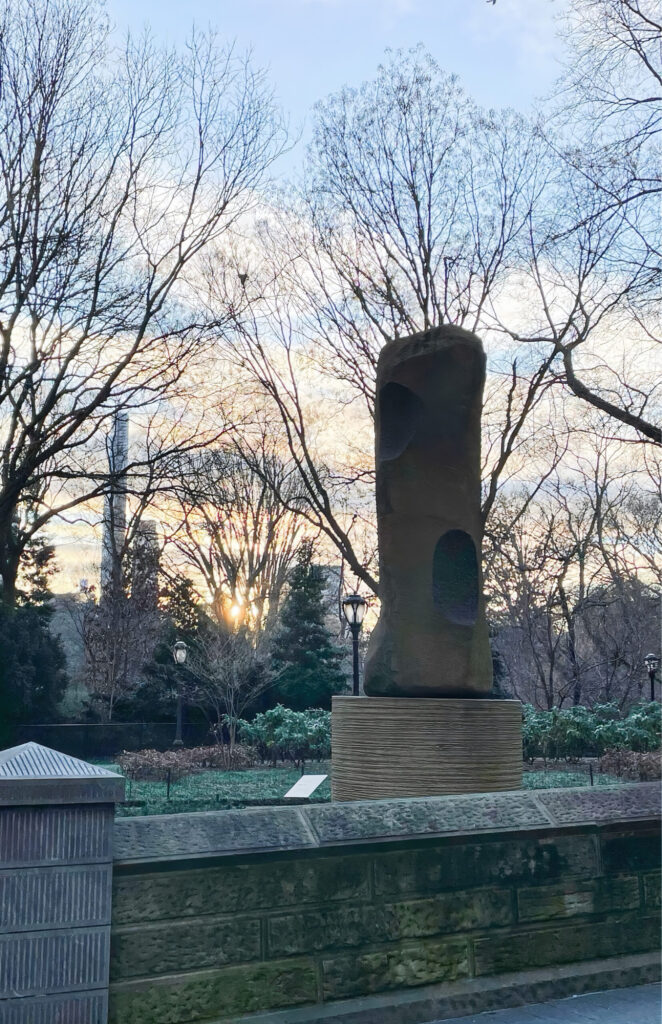
Just to the right of the main entrance to The Metropolitan Museum of Art stands another of his sculptures, Unidentified Object.
Carved from black basalt, it is a tall stone sculpture. Perhaps it is the result of having stood in nature for so many years. The stone’s surface has changed in color, and patches of moss have taken root here and there.
Yet the sculpture does not seem to insist on its presence. It rests almost effortlessly within the surrounding landscape of Central Park, as though it has always belonged there.
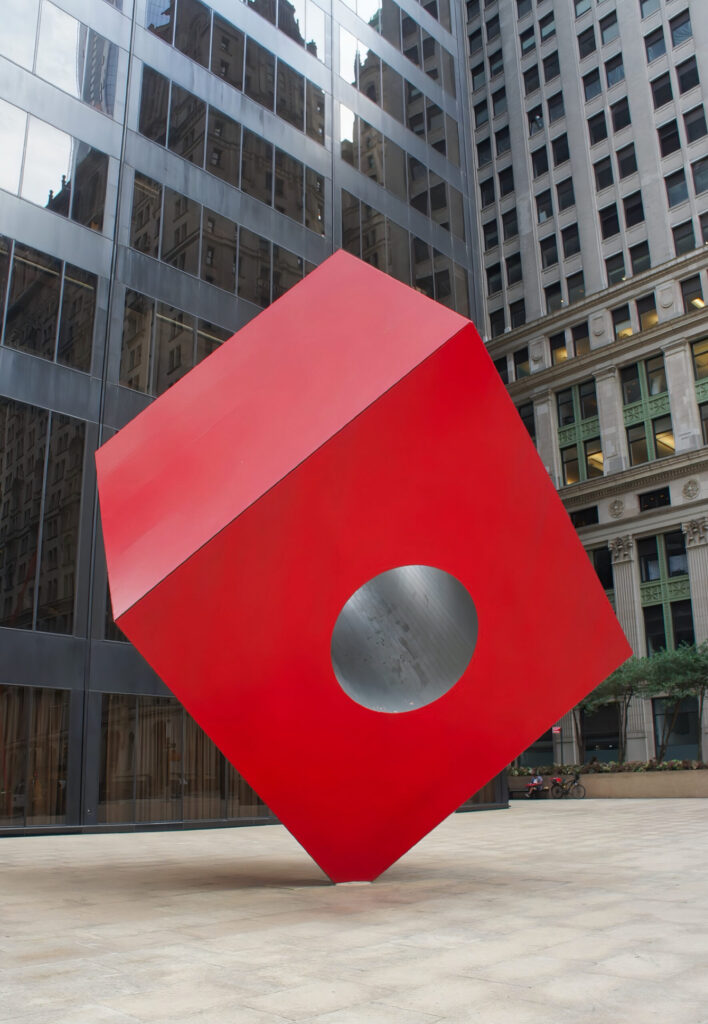
Another work of his that I cannot forget stands in Manhattan’s Financial District, among the towering skyscrapers of Wall Street.
It is Red Cube, a striking red geometric sculpture.
The enormous cube appears to pierce the ground, its vivid color and bold form standing out against the surrounding architecture.
At first glance, it might seem like an independent work of contemporary art, separate from the buildings around it.
And yet, something remarkable happens. Its simple geometric form and brilliant red color seem to harmonize with the surrounding skyscrapers and the rhythm of the city.
It has become part of the urban landscape itself.
A quiet composition of water and stone. A sculpture resting in nature. A vivid red cube standing amid the towers of a financial district.
The materials, scale, and settings are entirely different.
And yet, none of these works seems to rely on overwhelming its surroundings to establish its presence.
Instead, each seems to find its place through a relationship with the environment around it.
Noguchi’s art does not remain confined to museum walls.
It has become part of New York itself.
|An Artist Who Searched for a Place to Belong
Who was Isamu Noguchi, and what kind of life led him to create such distinctive works?
Born in Los Angeles in 1904, Noguchi was the son of Japanese poet Yone Noguchi and American writer Leonie Gilmour.
He spent part of his childhood in Japan before moving to the United States at the age of thirteen.
In 1922, he moved to New York and began studying in the premedical program at Columbia University. Eventually, however, he chose the path of sculpture, going on to become one of the most influential artists of the twentieth century.
His life could never be explained entirely through a single country or culture.
In Japan, he was the child of an American mother. In America, he was a person with Japanese roots.
Moving between these two cultural worlds, he faced the difficult question of where he belonged.
Of course, it would be too simplistic to define his entire life through the single word loneliness.
Nevertheless, his experience of living between Japan and America invites us to consider the challenges of searching for identity and a sense of belonging.
Who am I?
Where do I belong?
And where can I live in a way that allows me to be fully myself?
These questions are not limited to differences in nationality or culture.
At some point in life, many of us feel that we do not quite fit in, or that we have lost our sense of place in the world.
Relationships, work, family, illness, and major life transitions can all challenge the world we once took for granted.
When that happens, we may find ourselves asking what truly matters to us and how we want to live.
Noguchi’s life seems to invite us to consider these questions for ourselves.
|Why Does Isamu Noguchi’s Art Resonate with New York?
One explanation for Noguchi’s recognition in America, including New York, is his ability to bring Japanese and Western cultural influences together.
But I believe there is more to his work than cultural fusion alone.
He was not simply an artist who brought his creations from Japan to New York.
His work extended far beyond sculpture into gardens, public spaces, stage design, and furniture. He became someone who helped shape the cultural landscape and physical environment of New York itself.
His art cannot be contained within a single cultural identity.
It carries a sensibility that may feel distinctly Japanese, yet it cannot be explained by Japan alone. It belongs to the world of modern Western art, yet it also reaches beyond the boundaries of that tradition.
Rather than answering the question, “Was he Japanese or American?” with one identity or the other, perhaps Noguchi created art that transcended the limitations of that very choice.
That may be part of the reason his work feels at home in such different settings: inside a museum, surrounded by nature, or among the towering buildings of a modern city.
There is nothing in his art that loudly proclaims its strength.
Despite their differences in material and scale, his works do not impose themselves on the viewer.
What I sense in them is not the strength that seeks to overpower its surroundings, but the strength to remain true to oneself while accepting difference.
For me, this is one of the deepest qualities of Noguchi’s art.
It is the strength of someone who has known struggle and loneliness, and who has learned to let go of what is unnecessary.
A quiet strength, yet one that does not waver.
And through his art, that strength continues to speak across generations and cultures.
|Art Can Help Us Find Our Way Back to Ourselves
The time I spent in front of Water Stone remains with me to this day.
As I watched the water flow, I reflected on my life, considered where I stood in the present, and thought about the future.
Sitting in front of the sculpture did not solve every problem in my life.
But it helped quiet my mind and gave me the space to look honestly at my own feelings.
That time was precious to me.
I do not believe the value of art is determined solely by its beauty or its place in art history.
For one person, a work of art may inspire overwhelming emotion.
For another, it may offer a way to understand feelings that have long been difficult to express.
And for someone like me, Water Stone became a place to pause, let the mind wander, and find my way back to myself.
Art does not always give us answers.
But sometimes, it reminds us that we do not have to find them immediately.
We do not always have to become someone remarkable. We do not always have to seek recognition from others.
Sometimes, we simply need to be present and discover what our own hearts are telling us.
I believe that moments like these can enrich our quality of life.
For me, as someone born and raised in Japan, Noguchi’s work also rekindles a sense of pride in my Japanese heritage.
But his art matters for reasons far beyond my own cultural background.
A human being lived between different cultures, searched for a place to belong, and transformed that experience into art.
And that art continues to reach people across national and cultural boundaries.
I believe this is where some of its most enduring, universal value lies.
|Quality of Life – Finding Our Way Back to What Matters
Enriching our quality of life does not always require dramatic change or extraordinary experiences.
Sometimes, it begins with something as simple as sitting on a bench in a museum, watching water flow over stone, or pausing in front of a work of art that moves us.
Those small moments can become opportunities to reconnect with ourselves.
Reflecting on Noguchi’s work and the time I spent in New York, I am reminded of three principles that continue to shape my understanding of Quality of Life.
Discover | Open Yourself to New Perspectives
By engaging with art and the lives of others, we discover unfamiliar worlds—and sometimes, new dimensions of ourselves.
Savor | Appreciate the Present Moment
The sound of water, the play of light, the stillness of a quiet space. By paying attention to these small details, we learn to appreciate the beauty that already exists in our everyday lives.
Live with Grace | Live Authentically and with Resilience
Rather than forcing ourselves to conform to other people’s expectations or the boundaries imposed by society, we can learn to recognize what truly matters to us and create a life that reflects who we are.
Isamu Noguchi never fit entirely within a single place or identity, whether in Japan or America.
Instead of limiting himself to one side, he embraced both cultures and created a world of his own.
His life reminds us of something important.
Our place in the world is not always something someone else gives us.
Sometimes, we can create a place of our own through the way we choose to live.
And when we feel lost, we do not always have to rush toward an answer.
We can pause and listen to the quiet voice within us.
We can take the time to rediscover what truly matters.
Just as I did that night, sitting on a small bench in The Metropolitan Museum of Art.
Perhaps what we are searching for is not a perfect place to belong.
Perhaps it is a place where we can be ourselves—and a moment in which we can find our way back to who we are.
I believe that is one of the most precious ways to enrich the quality of our lives.